Recycle Batteries Properly
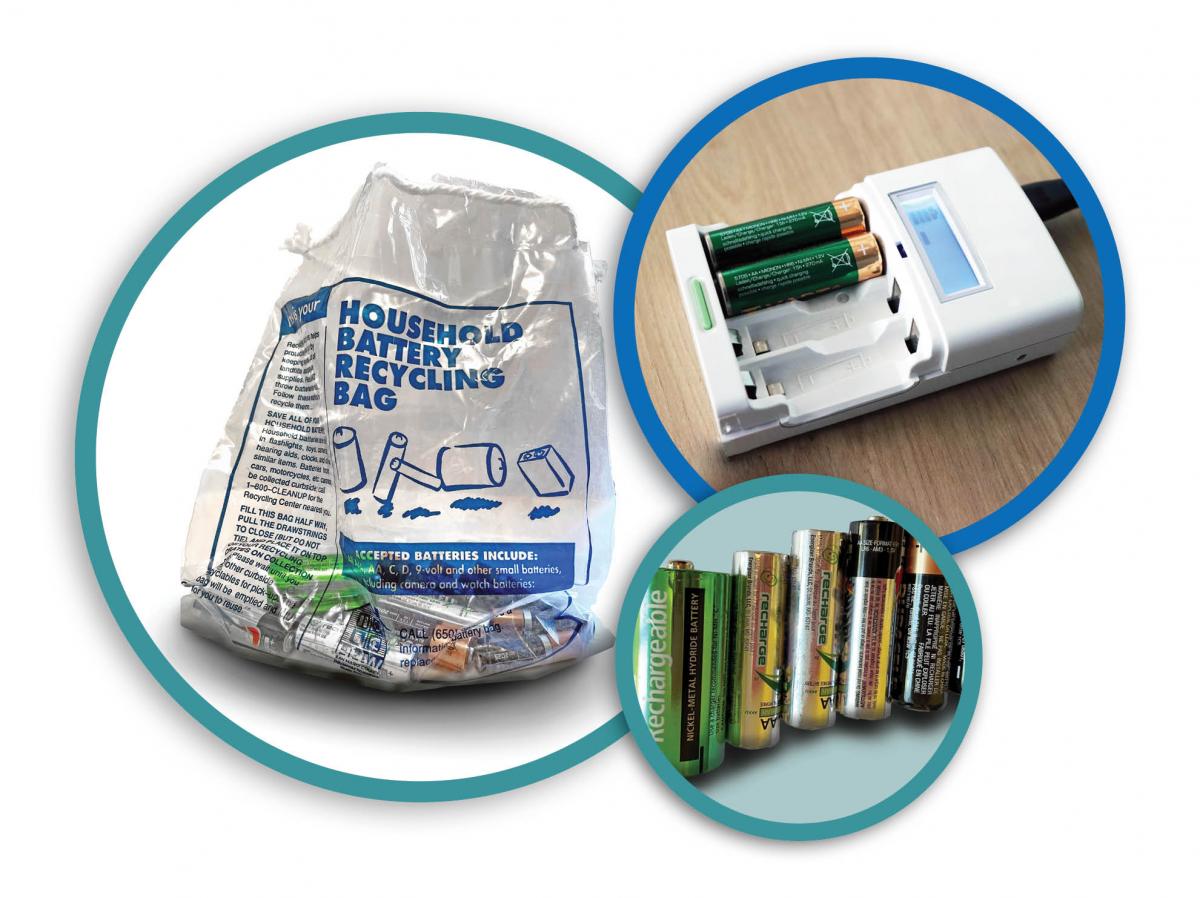
Depleted rechargeable and single-use batteries, of all shapes and sizes from AAA, AA, C, D, button, coin cell, 9-volt, and lithium-ion batteries are hazardous waste and must be recycled properly to protect our community and the environment.
Preparing Your Batteries for Recycling
Store batteries in a cool, dry place away from flammable materials and out of reach from children and pets until you are ready to recycle them.
- AAA, AA, C, and D batteries: Do not need to be taped. Place them in a plastic bag before recycling.
- Button and coin cell batteries: Wrap each individually with tape and place them in a plastic bag.
- 9-volt batteries: Tape over terminals to prevent fires, then place them in a plastic bag.
- Larger lithium-ion batteries (from laptops, e-scooters, e-bikes, power tools, etc.): Store separately, do not stack or store in soft material carriers.
All batteries should be bagged before being taken for recycling.
Collection Options in San Mateo County
In San Mateo County, residents have several options for battery recycling:
Curbside Pick-up Options
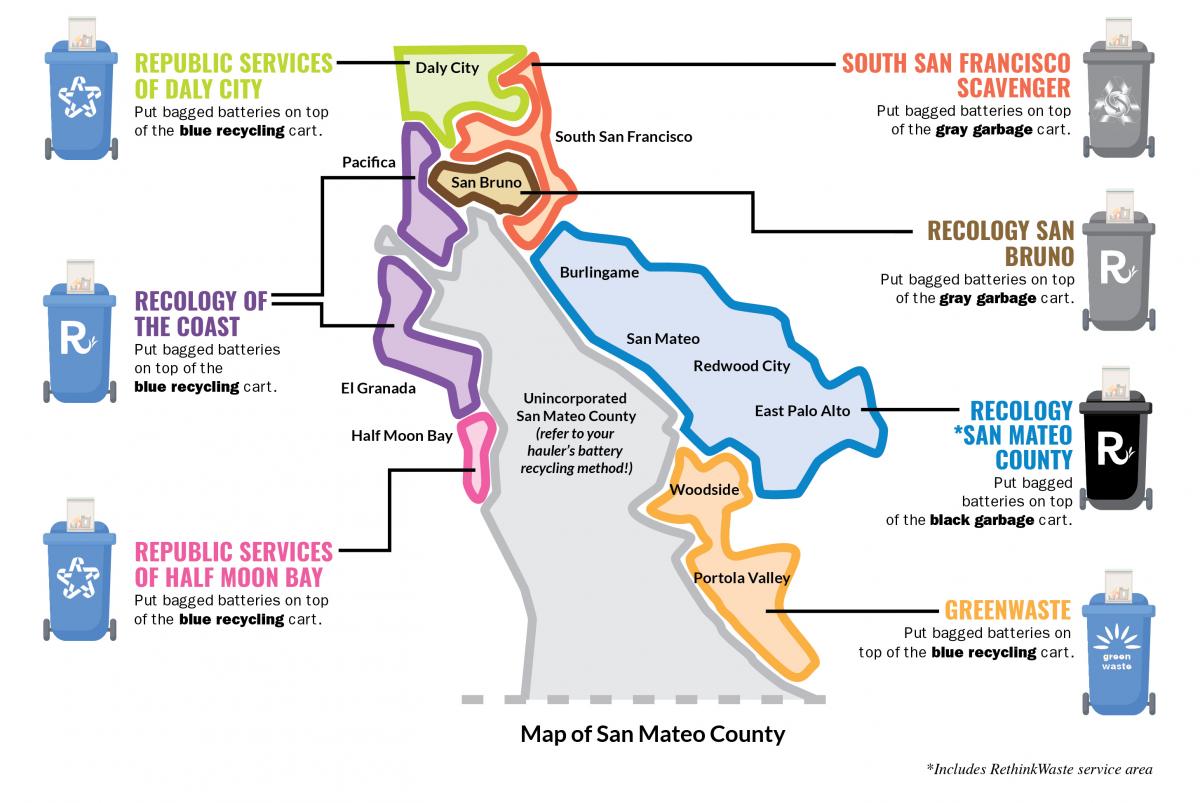
If you live in a single-family home, duplex, condominium, or townhouse, your hauler may offer a curbside battery pick-up option. Click on your hauler for more information on small, household battery recycling.
|
South San Francisco Scavenger Republic Services of Daly City Republic Services of Half Moon Bay |
Apartment Battery Recycling
Select apartment complexes offer orange recycling battery buckets provided by the complex’s waste hauler. Don’t have one? Ask your property manager about getting a battery bucket where you live.
Local Drop-off Locations
Find convenient local drop-off recycling options for household single-use and rechargeable batteries using our interactive map.
Lithium-Ion Batteries
Lithium-ion (li-ion) batteries are generally recycled differently than other types of batteries. You can find Ii-ion batteries in many household items, from smartphones and laptops to power tools and mobility devices (e-scooters, e-bikes, etc.)
Li-ion batteries are more powerful than other batteries and are more susceptible to being damaged and causing fires or explosions.
Like all other batteries in California, Ii-ion batteries must be recycled properly. Li-ion batteries are not accepted at all places other batteries are accepted, so finding the right recycling location is key.
Here are some local Ii-ion battery recycling centers in San Mateo County:
| Lithium Battery Type | Recycling Location |
| AA or smaller | San Mateo County Environmental Health Services Household Hazardous Waste Program (Appointment required) |
| AAA, AA, C, D, 9V, button/coin cell |
Shoreway Public Recycling Center Blue Line Transfer Station Alternative Recycling Guide Home Depot (San Mateo, San Carlos, East Palo Alto, Foster City, Daly City, Colma) |
| Haulers | See map above |
| Bike Batteries | Call2recycle’s bike battery recycling map |
| Bulk Battery Recycling | *Battery Recyclers of America |
*accepted for a fee
The Battery Network and Recyclestuff.org are other excellent resources for finding more information on lithium-ion batteries and recycling centers near you.
Free Household Hazardous Waste Collection
When curbside and local drop-off locations are not the best option, all single-use, lithium-ion size AA or smaller, and car batteries are accepted at our Household Hazardous Waste (HHW) facility and temporary collection events. You can make an appointment online or call (650) 372-6200 to make an appointment to drop off batteries and other HHW for free.
Consider Sustainable Options
While single-use batteries offer convenience, rechargeable options are more sustainable and cost-effective over time. Rechargeable batteries are offered at most locations where single-use batteries are sold. While they may cost more upfront, they can be used up to 1,000 times, recovering your initial investment after several uses